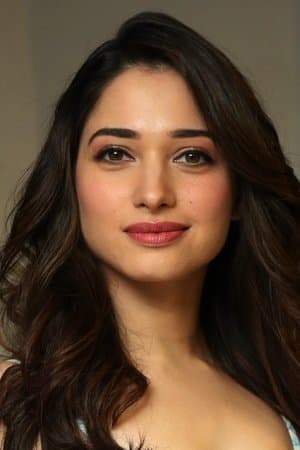
Tamannaah Bhatia: A Career In Telugu Cinema begins the way many Telugu film stories begin. A performer arrives from elsewhere, then makes the industry her own. She works mainly in Telugu and Tamil cinema, with a parallel presence in Hindi films. Readers outside southern India often meet her first in a dubbed or Hindi version of a big Telugu title. This piece looks only at her Telugu work and the pattern running through it. The confirmed filmography is its spine, not something to retell.
A Career Built Across Two Film Industries
Her first screen role came in the Hindi film Chand Sa Roshan Chehra (2005). She moved into Telugu cinema the same year with Sri (2005), and into Tamil cinema the following year with Kedi (2006). That early zigzag between three languages is worth noting, because it shaped how her Telugu career developed. She was never tied to one industry's pipeline. Call her a freelancer in the healthiest sense: a performer who could be dropped into a story in any of three languages and hold it.
The turning point came in 2007, when Sekhar Kammula's Happy Days (2007) put her at the centre of a Telugu story. That same year, Balaji Sakthivel's Tamil drama Kalloori (2007) gave her a second breakthrough. Both films belong to a format the industry calls coming-of-age: a story that follows a young character's growth into adulthood, usually across a school or college setting, with the emotional weather of that passage as the main event. Both sit in that mould, and together they establish a recognisable thread in her choices. She is at her most useful to a film when the film is about someone learning who they are.
The Hindi work continued alongside, but the Telugu and Tamil line is where the volume sits. A "breakthrough" in industry usage means the role after which a performer is no longer a newcomer and starts being cast as the reason to greenlight a film. For Bhatia, that shift happened in the same year in two different languages. That is unusual, and it tells you something about how producers were reading her at the time.
The Telugu Filmography, Role by Role
The confirmed Telugu list after her debut years starts with Oosaravelli (2011), where she plays Niharika. It continues with Rachcha (2012), in which she plays Chaitra, and Cameraman Ganga Tho Rambabu (2012), where she leads as Ganga. Both 2012 films place her opposite a major male lead in an action-driven story, the standard commercial format in Telugu cinema: a hero's journey with a female lead who carries the emotional stake and at least one set-piece built around her. The role names matter here. Chaitra and Ganga are characters with their own momentum, not decoration.
Two releases define a different scale. In Bāhubali: The Beginning (2015) and Bāhubali 2: The Conclusion (2017) she plays Avanthika, the warrior princess who sets the young Shivudu on the path towards the captive queen of Mahishmati. The first film follows Shivudu, a foundling raised in a small village who discovers exceptional gifts and a queen held captive for twenty-five years. The second moves between his search for his heritage and the past events of the kingdom. Avanthika is the character who turns the hero's curiosity into a mission, which is a structural job, not a decorative one. She returned to the role in Bāhubali: The Epic (2025), a reworking of the two-part epic. It is a useful reminder that in Telugu cinema a hit epic can be re-cut and re-released as a single experience years later.
A "special appearance" is a brief on-screen turn, sometimes a single song, by a well-known performer rather than a full role. She has two among her Telugu credits: Jaguar (2016), in the song "Sampige", and Sarileru Neekevvaru (2020), in the song "Daang Daang". These are not footnotes. Song appearances are a distribution asset in this industry, and being asked to headline one is a measure of pull.
Elsewhere she plays Keerthi in Oopiri (2016), Harika in F2: Fun and Frustration (2019) and Lakshmi in Sye Raa Narasimha Reddy (2019), a period film about the 1846 revolt of the Telugu chieftain Uyyalawada Narasimha Reddy against the East India Company. That last one is her clearest step into historical drama, a genre where the female lead is often the moral centre rather than the action centre. Bhola Shankar (2023) lists her as Lasya. Read the list end to end and a pattern emerges: comedy, period, epic, action, and the occasional song turn, with no single genre claiming her.