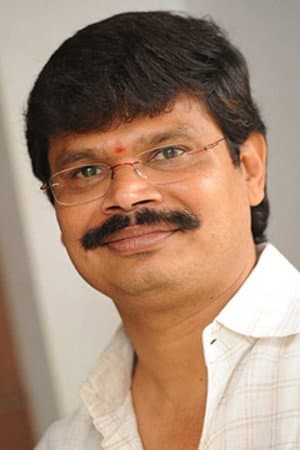
Boyapati Srinu is a director and screenwriter in Telugu cinema, the film industry based in Hyderabad that makes films in the Telugu language and ranks among the largest in India by output. His name is attached to a particular kind of picture, and understanding that kind is the purpose of this piece.
The form he works in is masala: a commercial Indian mode that blends action, family drama, comedy and music into one long narrative. Within that mode, he works at the loudest end. Before direction, he worked as a photographer and a part time reporter, and he came into films as an assistant before making his debut as director with Bhadra in 2005. Across the career, three things repeat. Family honour sits at the centre. A household is wronged or threatened. And a hero's body does what physics does not allow. He usually writes as well as directs, which is much of why the films feel so consistent from one to the next.
The Films and What Each One Added
In Telugu film talk, "mass" means material built for a broad, largely male audience, pitched at maximum volume and timed for crowd reaction. Boyapati is discussed almost entirely in these terms. His filmography is best read in three runs.
The early run covers Bhadra (2005), Thulasi (2007), Simha (2010) and Dhammu (2012). Simha is the clearest early example of the method. Its hero is a college professor who beats up wrongdoers, then learns of a violent family past that runs directly into his present. Family history arriving to disrupt an ordinary life is already the engine. The middle run covers Legend (2014), Sarrainodu (2016), Jaya Janaki Nayaka (2017) and Vinaya Vidheya Rama (2019). Sarrainodu shows the middle-period hero: a jobless former soldier who spends his time beating up local troublemakers until he crosses a shady figure. The hero is defined by force rather than by a job or a plan.
The later run covers Akhanda (2021), Skanda (2023) and Akhanda 2: Thaandavam (2025). Akhanda is the fullest statement of his method. Two brothers are separated at birth, one a local hero and one a secluded devotee of Shiva, and they are reunited when the family is threatened. The 2025 follow up returns that figure from isolation because the world is in danger. He is credited as writer or as story and screenplay writer on several of these titles alongside direction.
The Two Brother Device
The separated or doubled hero, one half in the world and one half outside it, appears in the Akhanda films. It gives the director a way to stage two kinds of force inside one story. Treat it as a pattern a viewer can spot rather than a claim about intention.
The Subjects He Returns To, and Why the Name Travels
The recurring material is plain. Family honour. A wronged household. A hero who acts outside the law when institutions fail. Violence staged as spectacle rather than as consequence. Simha and Sarrainodu, described above, carry all four. Devotion is a strand too, since Akhanda places one brother in a life of Shiva worship. That belongs to the film and not to any claim about the director himself.
Where he sits is straightforward to state. He is a commercial filmmaker working in the mass format, not in the art house or the newer wave of Telugu films that travels to festivals. That is description, not ranking. For a reader outside the region, the reason to know the name is that Telugu cinema's mass films travel widely on home video and in cinemas abroad, and Boyapati is one of the clearest examples of what that format is trying to do. Reference material on the industry and its scale is available through Wikipedia's entry on Telugu cinema, and title level detail can be checked on TMDb.
His films are a way to understand a whole mode of Indian filmmaking, not an outlier within it. Boyapati Srinu: The Films And The Filmmaking comes down, in the end, to that body of work: eleven features, one consistent argument about family, force and honour, and a style loud enough to carry across languages and borders.